
RESTORING MALAWI: FROM ECONOMIC CRISIS TO AN ECONOMY THAT THRIVES
Malawi stands at an economic precipice, burdened by multiple challenges, including –
Poor leadership, years of mismanagement and poor governance priorities
Years of mismanagement and poor governance priorities.
Reckless decisions leading to wasteful spending and unchecked corruption.
Unsustainable borrowing financing unnecessary travel, lavish lifestyles, and non-critical areas with little or no returns.
Depleted foreign reserves, resulting in a perpetually plummeting currency.
Skyrocketing inflation, making basic necessities unaffordable for families.
Lack of investment in industries, job creation, and future-oriented economic growth.
This is not merely an economic crisis—it is a failure of leadership and vision.
However, all is not lost. Malawi has the resources, talent, and resilience to rise
above these challenges and its economy.
By aligning with the pillars and enablers of MW2063—including Industrialization,
Agricultural Productivity, and Human Capital Development—we can chart a
strategic path forward. With prudent fiscal management, strategic investments,
and an unwavering commitment to accountability—driven by competent
leadership—we can create a new path toward recovery, growth, and shared
prosperity.
UTM Target Milestone:
By liberalizing the financial and services sectors and revamping the Tax Regime,
Malawi will unlock new economic opportunities, drive investment, and contribute
10-15% of GDP from these high-growth sectors. This transformation will strengthen
economic resilience, create new jobs, and expand access to capital and financial
services for businesses and individuals alike.
The time for bold action is now. With UTM’s vision and leadership, we will not only
rebuild Malawi’s economy but also position it as a thriving hub for investment and
innovation in Southern Africa.
UTM Target Milestone:
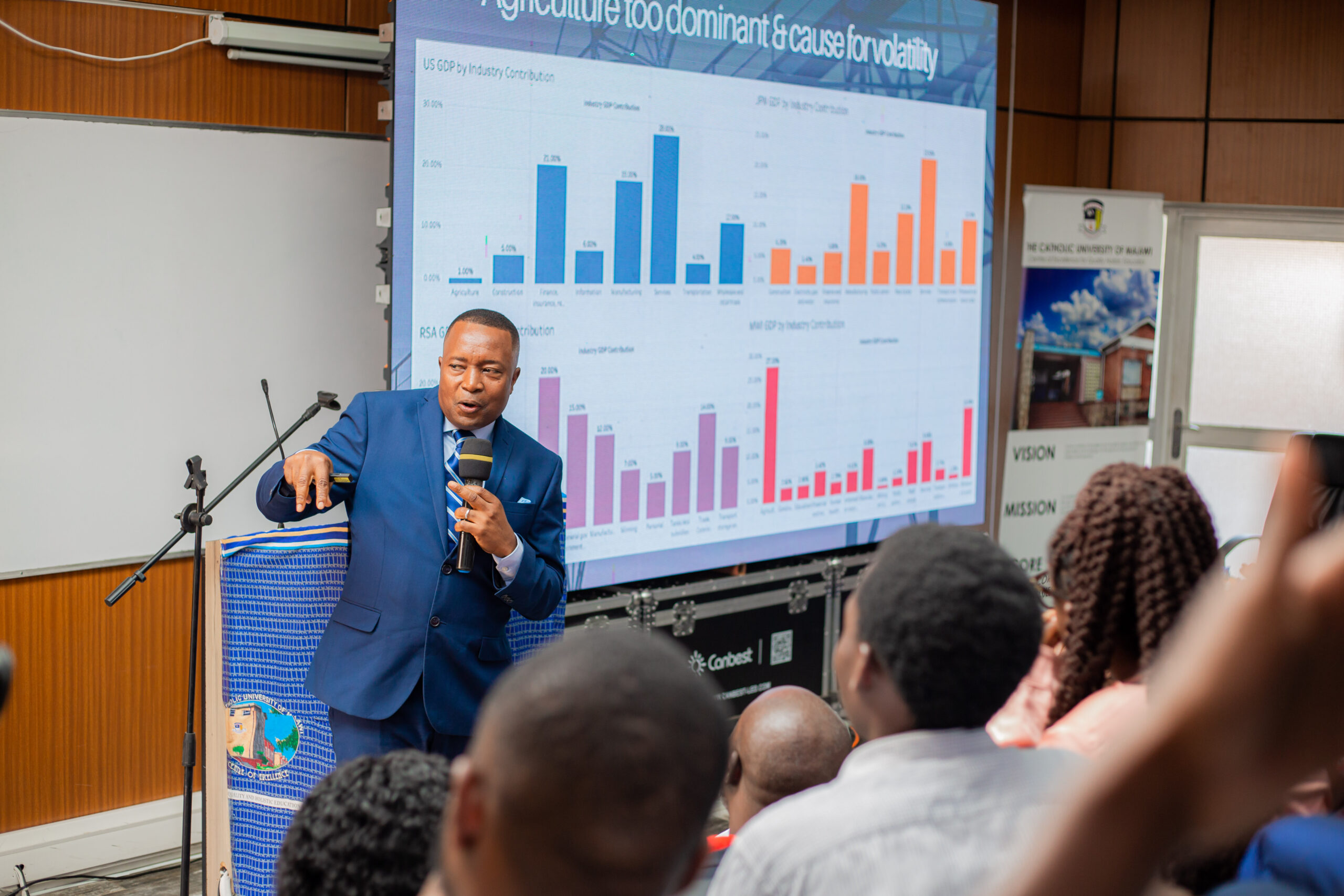
2.1 Grow Malawi’s GDP to $28 Billion and achieve GDP growth of 15%
Alignment with MW2063: This policy accelerates Industrialization, Agricultural Productivity, and Urbanization, ensuring investments that create synergy across these pillars. Priority will be given to initiatives like agro-industrial parks, which
integrate value addition, urbanization, and industrialization to drive job creation and enhance economic productivity. The UTM Policy strategy, also strengthens Private Sector Dynamism by fostering responsible investments and Environmental Sustainability by leveraging local comparative advantages for long-term economic resilience. Target Milestone: Dalitso Kabambe and UTM plan to achieve a sustained high GDP annual growth rate of 15% and grow Malawi’s GDP to $28 Billion in 5 years time, driven by strategic investments in key sectors that maximize economic transformation.
UTM Pledges:
- Maintain Budget Discipline: UTM will ensure budget deficits remain below 2% of
GDP, adhering to global best practices. - Align Spending Priorities: National budgets will focus on high-impact areas,
eliminating waste and corruption. - Empower Local Councils: Allocate no less than $10 million annually to each
council for infrastructure and public services depending on needs.
2.2 Debt Management
Alignment with MW2063: This policy supports the Economic Resilience Enabler by
ensuring Malawi’s fiscal sustainability and reducing vulnerability to external shocks.
Additionally, prudent debt management will enable investments in Agricultural
Productivity and Urbanization by freeing resources for infrastructure, energy, and
rural transformation, driving the broader economic goals of MW2063.
Target Milestone: By To free up resources for development investments by 2030:
UTM Pledges:
- Reduce Public Debt: Commit to reducing debt to sustainable levels (50% of GDP)
within 18 months. - Renegotiate Debt Terms: Secure waivers, extended repayment periods, convert
debts to PPP partnerships, and forgiveness where possible.
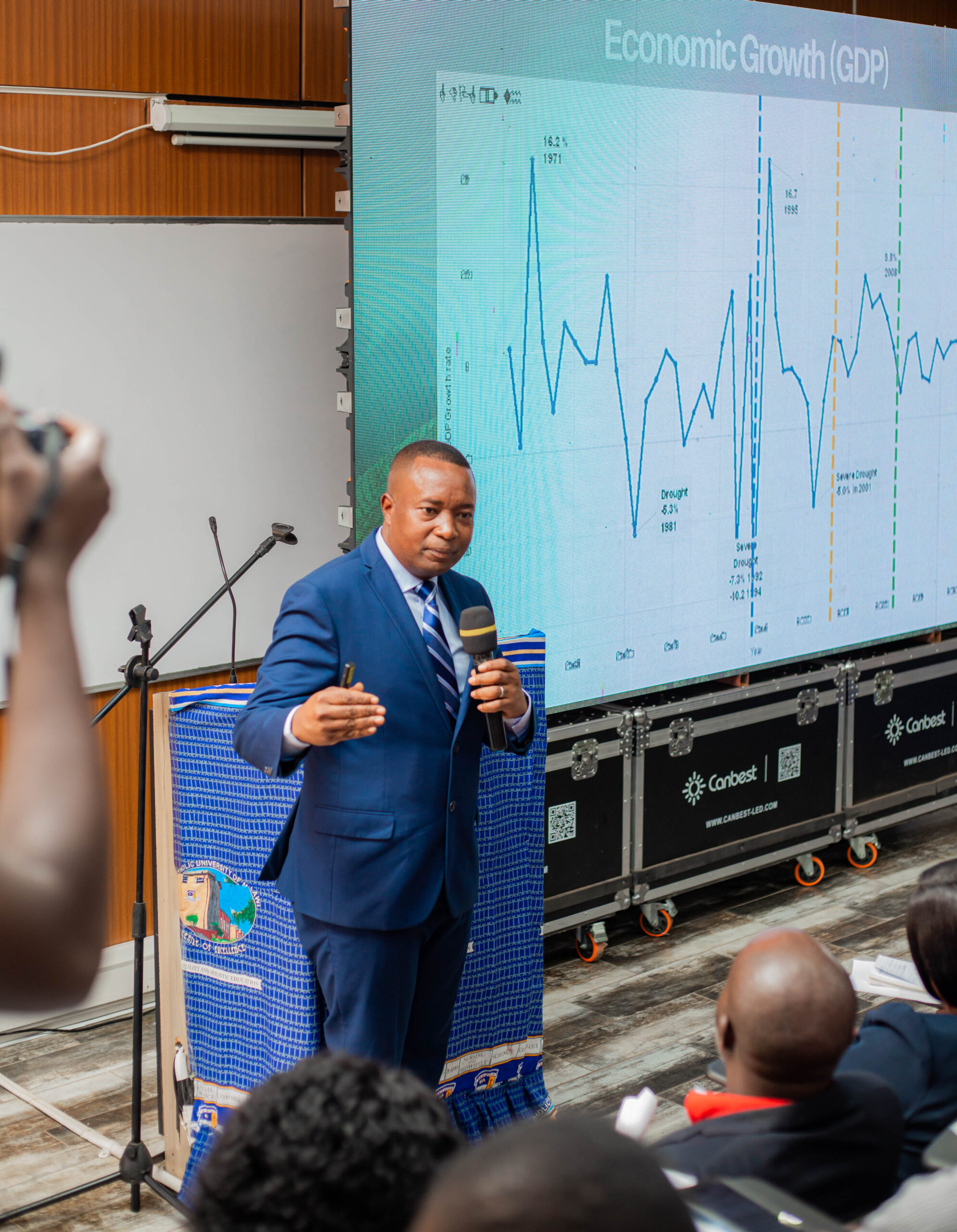
2.3 Prudent Monetary Policy
Alignment with MW2063: This policy
aligns with the Economic Resilience
and Governance Enablers by focusing
on long-term economic stability and
evidence-based decision-making.
Target Milestone: Achieve low and
stable inflation, ensuring price stability
and economic confidence within UTM’s
first term.
UTM Pledges:
- Control Inflation: Reduce inflation to
single digits within 9–12 months and
target 2% by the end of the first term. - Stabilize the Economy: Implement
evidence-based monetary policies to
ensure long-term economic stability.
2.4 Exchange Rate Stability
Alignment with MW2063: This policy
supports the Economic Resilience
Enabler by stabilizing the Kwacha and
fostering an environment conducive to
investment and growth.
Target Milestone: Achieve robust
foreign reserves to ensure economic
stability and resilience by the end of
UTM’s first term
UTM Pledges:
- Strengthen the Kwacha: Implement
pragmatic exchange rate p
- Liberalize Forex: Facilitate free forex
inflows and outflows while ensuring
effective monitoring to prevent abuse.
- Increase Reserves: Expand foreign
reserves to cover 12 months of imports,
securing economic confidence and
stability.
2.5 Affordable Credit
Alignment with MW2063: This policy aligns with the Private Sector Dynamism
Enabler by increasing access to affordable credit for entrepreneurs, especially
youth and small businesses.
Target Milestone: Establish an affordable and accessible financial system that
supports business growth and economic empowerment within UTM’s first two years.
UTM Pledges:
- Lower Interest Rates: to below 7% across banks, MFIs, and SACCOs to improve
access to affordable credit.
- Support Entrepreneurs: Simplify business processes and provide advisory
services, with a focus on youth and women entrepreneurs.
2.6 Achieving GDP Growth of 15%
Alignment with MW2063: This policy accelerates Industrialization, Agricultural
Productivity, and Urbanization, ensuring investments that create synergy across
these pillars. Priority will be given to initiatives like agro-industrial parks, which
integrate value addition, urbanization, and industrialization to drive job creation
and enhance economic productivity. The UTM Policy strategy, also strengthens
Private Sector Dynamism by fostering responsible investments and Environmental
Sustainability by leveraging local comparative advantages for long-term
economic resilience.
Target Milestone: By 2030, Malawi will achieve sustained high GDP growth, driven
by strategic investments in key sectors that maximize economic transformation.

UTM Pledges:
- Invest MWK 500 billion annually in four anchor sectors:
- Agriculture: Boost crop production, livestock, fisheries, and agro-processing.
- Minerals and Energy: Support mining, gas, and oil beneficiation.
- Tourism: Develop high-value, globally competitive tourism.Manufacturing and High-Tech Innovation: Advance industrialization and
technology-driven industries. - Establish economic hubs in districts to capitalize on local strengths and drive
regional development.
2.7 Transformative Initiatives
2.7.1 Tax Reduction: Attracting Investment, Encouraging Growth
Alignment with MW2063: Supports Private Sector Dynamism and Economic
Resilience by creating a favorable tax environment for business growth
Alignment with MW2063: Supports Private Sector Dynamism and Economic
Resilience by creating a favorable tax environment for business growth
UTM Pledges:
- Implement Strategic Tax Cuts: Expand the 15% tax rate currently offered to foreign
investors through MITC by implementing a uniform flat 15% business tax rate for all
businesses, both local and foreign. This will simplify the tax system and promote
fairness for all taxpayers.
- Boost Investment & Job Creation: Encourage local and foreign investors to
reinvest profits, leading to job growth, higher wages, and increased domestic
spending.
- Make Malawi a Tax-Friendly Hub: Position Malawi as Southern Africa’s top
investment destination by maintaining a stable, predictable, and globally
competitive tax framework.
2.7.2 Income Tax Grace Period: Helping Businesses Take Root
Alignment with MW2063: Encourages entrepreneurship and innovation by easing
tax burdens on new businesses
Target Milestone: Establish a pro-business environment that accelerates
entrepreneurship, supports new ventures, and drives industrial growth, recognizing
that economic revival is impossible without strategic incentives.
UTM Pledges:
- Introduce Tax Incentives for Startups: Expand and revise the 0% tax rate currently
offered to foreign investors, for 10 years, through MITC by implementing a uniform
5-year income tax grace period for all newly registered local and foreign
businesses, allowing them time to stabilize, pay back debts and grow while
simplifying the tax system and promote fairness for all taxpayers. - Support Expansion & Reinvestment: After the grace period, offer a 50% income
tax reduction for five years to encourage business expansion and reinvestment.
This excludes the mining sector. - Boost Manufacturing & Entrepreneurship: Boost Investment, Job Creation &
Reinvestment: Overhaul the customs duty regime to eliminate barriers to business
growth. Shift the focus to taxing revenues, not investments, encouraging both
local and foreign investors to reinvest profits. This will drive business registrations
and expansions—currently hindered by excessive compounding duty taxes—while
creating jobs, increasing wages, and stimulating domestic spending. Additionally,
remove all duties on raw materials used for local manufacturing to enhance
competitiveness and industrial growth.
2.7.3 Lower PAYE: Putting Money Back in Workers’ Pockets
Alignment with MW2063: Strengthens Human Capital Development by increasing
disposable income and enhancing workers’ quality of life.
Target Milestone: Establish a fair and growth-oriented tax system that increases
disposable income, stimulates domestic spending, and strengthens the economy—
ensuring that hard work allows employees to meet their daily needs.
UTM Pledges:
- Lower PAYE to Boost Incomes: Reduce PAYE to a flat 10%, allowing workers to keep
more of their earnings. - Stimulate Domestic Spending: Increase take-home pay to enhance purchasing
power, driving demand for goods and services. - Improve Quality of Life: Enable Malawians to afford better housing, education,
healthcare, and investments, fostering long-term economic stability.
Introducing a Tax Division System: Equitably Sharing Resources
Alignment with MW2063: Strengthens Governance Enabler by decentralizing tax
revenue distribution and empowering local development.
Target Milestone: Establish a more transparent and decentralized tax allocation
system to ensure that tax revenues directly support local development, improve service
delivery, and empower communities—starting with a pilot in Smart Cities by 2026.
UTM Pledges:
Implement a Tax Division System: Equitably allocate collected VAT and PAYE, 15%
to Constituencies, 15% to Cities, 15% to Districts, and 55% to Central Government,
ensuring a fair distribution of resources to enhance local development.
- Pilot in Smart Cities: Test the system in proposed Smart Cities, assess its impact,
and expand based on results to ensure efficiency and sustainability.
Promotion of a Robust Stock Exchange
Alignment with MW2063: Enhances Private Sector Dynamism by creating more
opportunities for investment and wealth creation.
Target Milestone: Reform stock market regulations to attract listings and increase
participation by 2030.
UTM Pledges:
- Modernize the Stock Exchange: Reform regulations to attract listings, boost participation, and grow investment opportunities.
- Youth and SME Access: Create pathways for
youth-led businesses and SMEs to access capital markets. - Encourage Private Participation: Mandate or incentivize more companies to list on the stock exchange.

Pension Investment Corporation
Alignment with MW2063: This initiative strengthens the Economic Resilience Enabler
by mobilizing pension funds for high-impact infrastructure and development
projects.
Target Milestone: By 2026, establish and incorporate a Public-Private Pension
Investment Corporation (PPPIC)
UTM Pledges:
- Unlock Pension Capital for Development:
1.Legal & Institutional Framework
The UTM government will establish the Public-Private Pension Investment
Corporation (PPPIC) through:
- Legislation & Regulation – A Pension Investment Act will define the mandate,
governance structure, risk management, and reporting mechanisms. - Public-Private Partnership (PPP) Model – The government will collaborate with
private sector pension fund managers and institutional investors. - Central Bank & Financial Regulators – The Reserve Bank or a Financial Regulatory
Authority will oversee compliance to maintain transparency, accountability, and
fiduciary responsibility.
2.Ownership & Governance Structure
from private sector efficiency and risk management expertise:
- Government (Minority Stakeholder): Will provide policy direction, regulatory
oversight, and ensure national development alignment. - Private Pension Funds (Majority Stakeholder): Will contribute funds and ensure
professional asset management. - Board of Directors (Independent & Mixed): Will includes representatives from
government, pension funds, independent experts, and civil society to maintain
transparency. - Investment Committee: Professional fund managers will oversee asset allocation
and risk management. - Auditors & Compliance Officers: Audit firms will conduct regular audits and
enforce strict compliance with investment guidelines.
3.Investment Strategy & Asset Allocation
The PPPIC will invest the pension funds safely and profitably, ensuring high returns
while securing retiree savings. Investment portfolios should include:
- Safe, High-Yield Infrastructure Projects – Toll roads.
- Commercial Real Estate & Smart Cities – Office parks, housing, industrial zones.
- Renewable Energy & Green Investments – Wind, solar, and hydropower for
sustainable returns. - Government Bonds & Blue-Chip Stocks – Ensuring low risk and stable dividends.
- Agribusiness & Export-Oriented Industries – Driving economic diversification and
job creation.
Strict Risk Management Measures: - Investment limits per sector to prevent overexposure.
- Diversified portfolio to spread risk.
- Independent risk assessments before major investments.
4.Profit Distribution & Retiree Security
- Profits generated will be reinvested and partially distributed to pension fund
members as dividends or enhanced retirement benefits. - Minimum guaranteed returns to secure retiree pensions.
- Government backs a stabilization fund to protect pensions from economic
shocks.
5.Transparency & Accountability Measures
To prevent mismanagement, the government will enforce:
- Quarterly & Annual Public Reports – Detailing fund performance.
- Independent External Audits – Conducted by internationally recognized firms.
- Whistleblower Protections & Anti-Corruption Safeguards – Ensuring
accountability. - Digital Public Dashboard – Real-time tracking of investments and returns.
6.Expected Outcomes for Malawi
Unlock billions in pension capital for national development.
- Provide sustainable, high-yield investments that grow pensions.
- Reduce government borrowing, as pension funds finance infrastructure.
- Create thousands of jobs in infrastructure, energy, and agribusiness.
- Secure Malawians’ retirement savings while boosting economic growth.
7.Dziko Bond: Unlocking Diaspora Investment for Malawi’s Future
Malawi’s development journey requires bold, innovative financing strategies that
harness the power of Malawians at home and abroad. To mobilize significant
capital for mega farms, infrastructure, and industrialization, Dalitso Kabambe and
UTM will also launch the Dziko Bond—a structured and secure and government
backed, investment vehicle, giving credibility and allowing Malawians in the
diaspora, as well other investors to contribute directly to national growth while
earning competitive returns with flexible investment terms.
The Dziko Bond will be globally accessible and tradable, ensuring that investors
from across the world can participate in building a self-sufficient and prosperous
Malawi. And managed through an independent Dziko Investment Board to ensure
transparency
Strategic Investment Sectors
Funds raised from the Dziko Bond will be allocated to key projects that drive
sustainable economic transformation like mega farms and agribusiness, roads,
energy, and water systems to support agriculture, tourism, and industrialization.
Special Economic Zones – Agro-industrial parks and value chain development.
Global Listing & Accessibility
To ensure maximum credibility, liquidity, and investment potential, the Dziko
Bond will be listed on multiple financial markets, allowing both institutional and
individual investors to participate.
Primary Listing
- Malawi Stock Exchange (MSE) – Pension funds, banks, and insurance companies
in Malawi can invest. - London Stock Exchange (LSE) – International Securities Market – For Malawi and
other African diaspora to participate - Nasdaq Dubai For Middle Eastern & African investors
- Johannesburg Stock Exchange (JSE) – For regional African participation
Secondary Listings & Trading Platforms - New York Stock Exchange (NYSE) or Nasdaq – To attract US-based Malawian
diaspora & institutional investors. - Euronext (Paris, Amsterdam, Brussels) – To reach European development
investors. - Singapore Exchange (SGX) – To engage Asian investors & global funds.
Digital & Alternative Trading - Euroclear & Clearstream – For global institutional bond trading.
- Blockchain-Based Bond Marketplaces – Providing retail diaspora investors with
access via fintech platforms.
By launching Dziko Bond, Dalitso Kabambe and UTM will afford Malawians abroad
to play a direct role in funding national development, turning remittances into
nation-building capital. This is more than an investment—it’s a transformational
commitment to Malawi’s future.
Dziko Bond – Invest in Your Nation. Build the Future
MIDDLE-CLASS FAMILIES IN MALAWI: THE BACKBONE OF OUR NATION
Empowering Malawi’s Middle Class
Malawi’s middle-class families are the backbone of our economy, driving growth
through their hard work and contributions as the largest taxpayers. We are
committed to supporting their aspirations through the above targeted tax cuts,
expanded economic opportunities, and improved public services to enhance their
quality of life.
Supporting Growth and Home Ownership
As more Malawians join the emerging neo-middle class, we will help stabilize
and elevate their living standards through access to quality housing and job
opportunities. Working with district councils, the Malawi Housing Corporation, and
local governments, we will promote affordable home ownership, introduce shared
property ownership under Sectional Title, and streamline housing approvals to
reduce construction and registration costs.
Creating High-Value Jobs Nationwide
To foster economic resilience, we will expand Malawi’s startup ecosystem beyond
major cities, promoting industries such as tourism, agriculture, technology, and the
creative economy. This will generate high-value jobs and unlock new opportunities
in district growth centers across the country.
A Vision for a Thriving Middle Class
Our vision is to build a thriving, dignified middle class that drives national
development. Through strategic investments, policy reforms, and community-led
initiatives, we will empower Malawian families to achieve their full potential and
secure a prosperous future for all.
Conclusion
Malawi’s economic revival requires bold action, strategic investments, and
unwavering determination. As Albert Einstein famously said, “Insanity is doing the
same thing over and over and expecting different results.” For decades, Malawi has
pursued the same tired economic approaches, yet progress has remained elusive.
It’s time to break this cycle.
Globally, tax cuts, financial liberalization, and access to affordable, targeted
financing are not just starting points but essential drivers of economic revival. No
country has successfully transformed its economy without creating a businessfriendly environment, mobilizing private sector investment, and ensuring citizens
have more disposable income to fuel domestic growth. Malawi must follow suit by
adopting pro-growth policies that empower businesses, workers, and investors alike.
Aligned with MW2063’s pillars of Industrialization, Agricultural Productivity, and
Urbanization, our economic revival strategies will directly contribute to achieving the
vision of a wealthy and self-reliant Malawi. The time for transformation is now. United
under UTM, we will rebuild our economy and secure a brighter future for generations
to come. Let us move forward with courage, innovation, and the will to succeed.